SaaS link building services
Ten providers compared on the four checks that actually predict whether a placement does anything, with real costs and where each one genuinely fits. Two of the ten are ours, disclosed below, and the reasoning for both placements is written out so you can disagree with it.
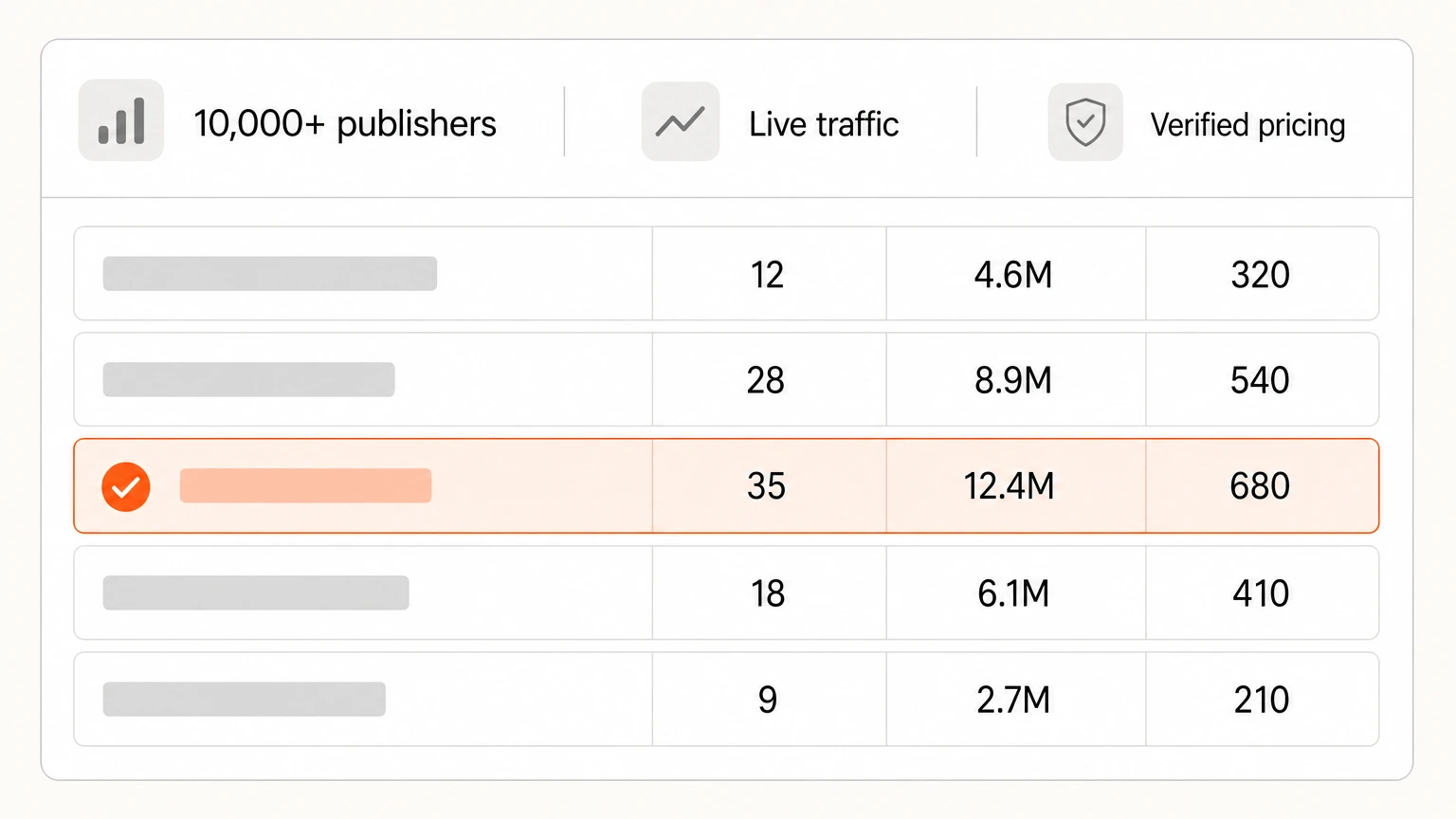
Authority Magnet publishes this comparison and appears in it, at number one for managed SaaS campaigns. PRWiz sits at number two and is operated by the same parent company, though by a separate team on a separate product. That is worth knowing before you read the rest. What the ranking is built on: eight years running link campaigns for software clients, placements we have paid for on most of the platforms named here, and the published market data behind the cost figures further down. Every provider is measured against the same four checks, each entry names where that provider is weaker, and the two entries that are ours carry the longest limitations sections on the page.
What are SaaS link building services?
SaaS link building services earn backlinks and brand mentions for software companies from publications, category roundups and partner sites, raising both Google rankings and citation rates inside AI answers.
Market retainers run $1,500 to $5,000 per month, and earned placements priced individually run $200 to $500 each for vetted, real-traffic sites. Anything advertised far below that is selling positions on sites built to sell positions.
The part most buyers underweight: the same roundups that pass link equity are the sources ChatGPT, Claude and Perplexity retrieve when someone asks which tool to use. One placement, two returns, and most providers still price it for one.
What SaaS link building services include
Three plays produce the overwhelming majority of value in this category. Everything else is a variation on them.
1. SaaS-to-SaaS outreach
Contextual links from peer software companies, integration partners and complementary tools. Every product you integrate with has a directory, a partner page and usually a blog, and these placements are relevant, durable and frequently free. Most SaaS companies have never systematically claimed them, which makes this the cheapest win available.
2. Alternative and comparison placements
Getting listed on "best tool" roundups and competitor alternative pages, which is where active software buyers look immediately before choosing. These placements pass authority, send referral traffic that converts unusually well, and feed the AI answers that now form shortlists. They are the highest-leverage target in SaaS link building and also the hardest to earn, because everyone wants them.
3. Digital PR and original data
Surveying your users, publishing the numbers, and pitching journalists and industry publications. This earns links from places no outreach email would ever reach, and the resulting asset keeps earning for years. It is the slowest play and the one with the highest ceiling.
4. AI search visibility
New enough that most providers still treat it as a rename of the same work, and it is not. The roundups and review platforms that AI engines retrieve from are a smaller, more specific set than the sites that pass link equity, and getting into them is a different target list. The test to apply to any provider: ask how they would know whether a placement changed anything in ChatGPT. A real answer names a prompt set, the engines covered and a baseline. Anything vaguer is the same outreach with a new label on the invoice.
Unlinked mention reclamation. People already name your product without linking to it. Finding those and asking is the cheapest link acquisition available, and almost nobody checks.
How to judge a SaaS link building provider
Four criteria separate providers who earn links from vendors who resell placements.
Strict relevance
Traffic verification
AI search awareness
The one-line test
The 10 SaaS link building services, ranked
Assessed on the four criteria above: relevance, traffic verification, AI search awareness, and whether the placement would be worth having if it carried no link at all. Two of the ten are ours and are marked.
Authority Magnet
Our agency, so weigh this accordingly. What separates it from the rest of this list is that we are not brokering through someone else's network. We built PRWiz, the marketplace at number two, and we run client campaigns on our own supply. That means when we recommend a publication we are looking at its live organic traffic, its real placement history and what it actually charges, rather than a DR figure and a broker's word. It is also why every placement report carries the URL, the anchor, the real traffic and whether that page ranks for anything at all.
Strengths
- Own publisher platform, so placement data is first-hand not brokered
- Published pricing, rare in this category
- Digital PR and AI citation tracking across seven engines included
- Month to month, thirty days notice, no annual lock-in
Where they are weaker
- Priced as a full search program, not links alone. If you only want links, number two is cheaper
- No named SaaS logos yet. Flagship case studies are high-ticket B2B and e-commerce
- Small roster, so availability is limited
PRWiz
Also ours, and it is the honest answer for a large share of the people who land on this page. PRWiz is a marketplace rather than an agency: 6,000+ vetted publishers and a 91,518-domain research catalog, each listed with live organic traffic and verified pricing, and you pick the placements yourself. If you have an in-house SEO who knows which publications matter in your category, this is cheaper and faster than any retainer on this list, ours included. You are buying supply and verification, not judgment.
Strengths
- 6,000+ vetted publishers, 91,518 domains priced across the market
- Live traffic and verified pricing on every listing, before you commit
- No retainer and no minimum, so it suits one-off campaigns
- You keep full control of which publications you appear on
Where they are weaker
- You are doing the selecting. It does not replace strategy
- No digital PR: a marketplace cannot pitch a journalist for you
- Wrong choice if nobody internally can judge a publication
Siege Media
One of very few agencies that can genuinely produce linkable assets at scale, and their digital PR output is consistently strong. Not SaaS-exclusive, which cuts both ways: less software-specific funnel thinking, broader pattern recognition on what actually earns a link. If your budget supports it and your bottleneck is that you have nothing worth linking to, they are the strongest answer on this list.
Strengths
- Exceptional at producing assets that earn links on merit
- Proven digital PR at volume
- Large, stable team
Where they are weaker
- Among the most expensive here
- Not SaaS-specific
- Volume model needs a real budget
uSERP
uSERP chases high-authority placements on recognizable publications, and they are named more often than almost anyone when buyers describe wanting their brand in front of a mainstream audience. That is a genuinely different goal from ranking a comparison page, and worth being clear about before you buy: tier-one mentions build brand and entity strength, they do not always move a specific keyword.
Strengths
- Strong relationships with high-tier publications
- Real brand-building value beyond the link
- Well known, which helps when a founder wants recognizable logos
Where they are weaker
- Expensive relative to placement count
- Brand outcomes are harder to attribute than ranking outcomes
- Overkill if you need bottom-funnel pages to rank
saaslinkbuilder
The most consistently cited SaaS-specific link provider in this category, and the specialization is real: SaaS-to-SaaS outreach, integration partners and competitor comparison placements are their whole business rather than a service line. If you want a provider who already understands why an alternative page matters more than a blog link, they need less explaining than most.
Strengths
- Genuinely SaaS-only focus
- Understands comparison and alternative placements
- Increasingly explicit about AI visibility, not just rankings
Where they are weaker
- No published pricing
- Smaller team than the volume shops
- Less digital PR reach than a media-first agency
Skale
Skale is an SEO agency that does link building rather than a link building agency, and for a Series B company that wants organic tied to MRR that is the right shape. Buying links from them in isolation is not really the offer. Worth calling because the AI engines name them constantly for SaaS SEO, which tells you something about their authority footprint.
Strengths
- Revenue-accountable framing rather than link counts
- Strong reputation among funded SaaS teams
- Links sit inside a coherent wider strategy
Where they are weaker
- Not a standalone link vendor
- Priced for funded companies
- London-based, partial US overlap
Above Apex
Positioned squarely at the organic marketing teams of B2B SaaS companies who want off-page handled without micromanaging it. That is a real and underserved buyer: someone who has the strategy and does not want another vendor to project-manage. Narrower than most on this list, which is the point.
Strengths
- Built around low-management-overhead delivery
- Clear B2B SaaS focus
- Brand mentions treated alongside links, which matters for AI visibility
Where they are weaker
- No published pricing
- Smaller operation
- Not a strategy partner
Omniscient Digital
Omniscient is a content agency rather than a link vendor, and they publish their own comparison of link building agencies by stage and budget, which is worth reading. Include them because a meaningful share of link building failures are actually content failures: outreach on a page nobody would cite fails regardless of who sends the email.
Strengths
- Best editorial standards in this group
- Senior people stay on accounts
- Publishes substantial original research, which is itself the link strategy
Where they are weaker
- Not a link building service in the direct sense
- Enterprise pricing
- Slower by design, so wrong for a quarter-end push
Outreach Monks
Productized, packaged by Domain Rating tier, and priced so you know exactly what arrives each month. That predictability is genuinely useful for a team that needs to forecast. The trade is that DR tiers are the wrong unit: a DR 70 site with two hundred monthly visitors passes very little, and packaging by DR does not distinguish between that and a real publication.
Strengths
- Predictable volume and cost
- Fast turnaround
- Accessible entry point
Where they are weaker
- Priced by DR tier, which is the metric easiest to manipulate
- Less relevance judgment than a bespoke campaign
- Limited digital PR
FatJoe
A large white-label marketplace built for agencies who resell. Included for completeness and because their pricing sets the floor people compare everything else against. At around $100 a placement you are buying volume from sites that exist to sell placements, which is a legitimate business for some resellers and the wrong purchase for a SaaS company trying to be cited by an AI engine.
Strengths
- Cheapest per placement on this list
- Genuinely fast at scale
- Built for white-label resale
Where they are weaker
- Marketplace inventory, so relevance is largely on you
- Exactly the source type AI models learn to discount
- Not built for end brands
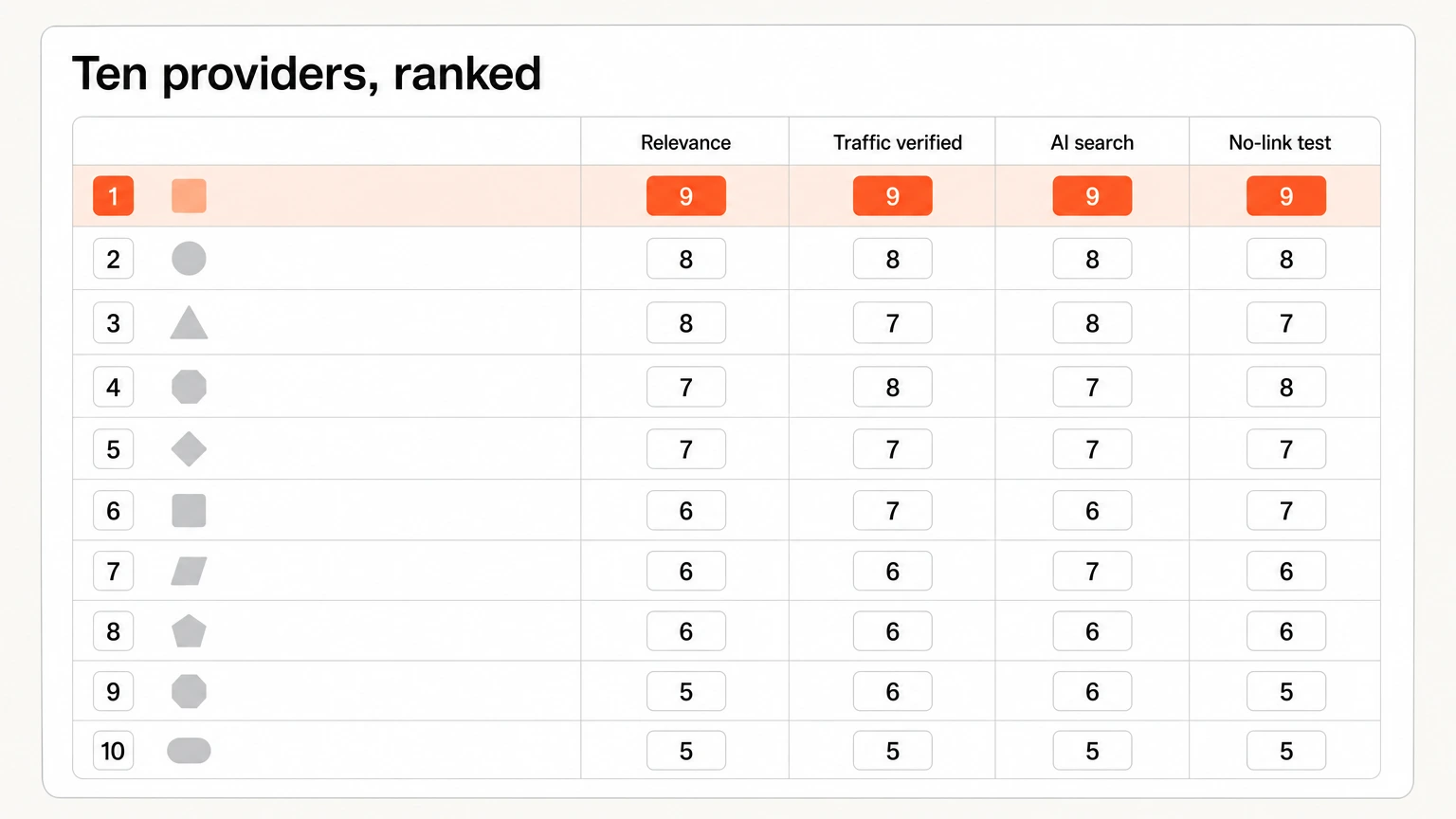
SaaS link building providers compared
The providers most often named for this service, against the four criteria above. Our assessment from public information, and we are in the table.
| Provider | Model | Typical pricing | Best for |
|---|---|---|---|
| 1. Authority Magnet | Managed outreach and digital PR | From $5,000/mo, published | managed campaigns with placement data you can audit |
| 2. PRWiz | Self-serve publisher marketplace | Per placement, no retainer | buying placements yourself, without a retainer |
| 3. Siege Media | Content-led link earning | ~$10,000 to $30,000/mo | linkable assets produced at real volume |
| 4. uSERP | Authority placements and digital PR | ~$6,000+/mo | tier-one media mentions on a funded budget |
| 5. saaslinkbuilder | Manual SaaS-to-SaaS outreach | Not published | a SaaS-only outreach shop with no other distractions |
| 6. Skale | Link building inside a revenue-accountable program | ~$10,000 to $20,000+/mo | funded SaaS wanting links inside a wider revenue program |
| 7. Above Apex | Off-page SEO for in-house teams | Not published | in-house teams who want links without the management overhead |
| 8. Omniscient Digital | Content-led authority | ~$10,000 to $25,000/mo | Best when the real problem is that nothing is worth linking to |
| 9. Outreach Monks | Productized packages by DR tier | ~$3,500/mo for 8 links | predictable volume at a fixed monthly cost |
| 10. FatJoe | White-label marketplace at scale | Per link, from ~$100 | agencies reselling, rather than for end brands |
Pricing for other providers is estimated from public statements and category benchmarks. Only our own figure is published. Ask each provider directly and compare on itemized deliverables rather than headline monthly cost.
The managed version, and when to buy the marketplace instead
Everything at number two is available to you directly without talking to us. If you have someone in house who can judge a publication, buy the placements yourself on PRWiz and keep the retainer. That is the cheaper answer and we would rather say so here than have you find out after three months.
What the managed program adds is judgment and pitching: deciding which pages need authority before they can rank, building the target list from your competitors' backlink gaps rather than from a marketplace search, and pitching journalists for the placements no marketplace can sell you. It sits inside a full search program, which is why the floor is $5,000 rather than the $1,500 to $3,000 a link-only vendor charges.
- Every placement reported with live data: URL, anchor, real organic traffic, and whether that page ranks for anything
- Digital PR included, which a marketplace structurally cannot do for you
- AI citation share baselined across seven engines before the first placement lands
- Month to month. Thirty days notice, no annual lock-in
The honest caveat we keep on every page: our flagship case studies are high-ticket B2B and e-commerce, not named SaaS logos. On link building specifically, the 294-placement campaign that produced 1,114 top-three keywords is the work to judge us on.
What SaaS links actually cost
Published so you can sanity-check any quote. These are earned-outreach costs, not marketplace fees. Providers selling guest posts specifically are ranked separately in the best blogger outreach services.
| Placement type | Realistic cost | Why it is worth it, or not |
|---|---|---|
| Category roundup inclusion | $300 to $1,000 | Highest value available. Passes authority and feeds AI citations at once. |
| Digital PR campaign | $500 to $2,000 per campaign | One data study can earn ten to fifty links from places outreach cannot reach. |
| Niche guest post | $200 to $600 | Worth it only on publications with genuine readership. |
| Unlinked mention reclaim | $50 to $150 | The cheapest links available. Most SaaS companies never look. |
| Partner or integration directory | Usually free | Requires only that someone asks. Consistently neglected. |
| Linkable asset build | $2,000 to $10,000 once | Then earns passively for years. The best long-run value on this table. |
| Marketplace placement | $50 to $200 | Cheap because it is worth little. Carries risk and gets discounted by AI models. |
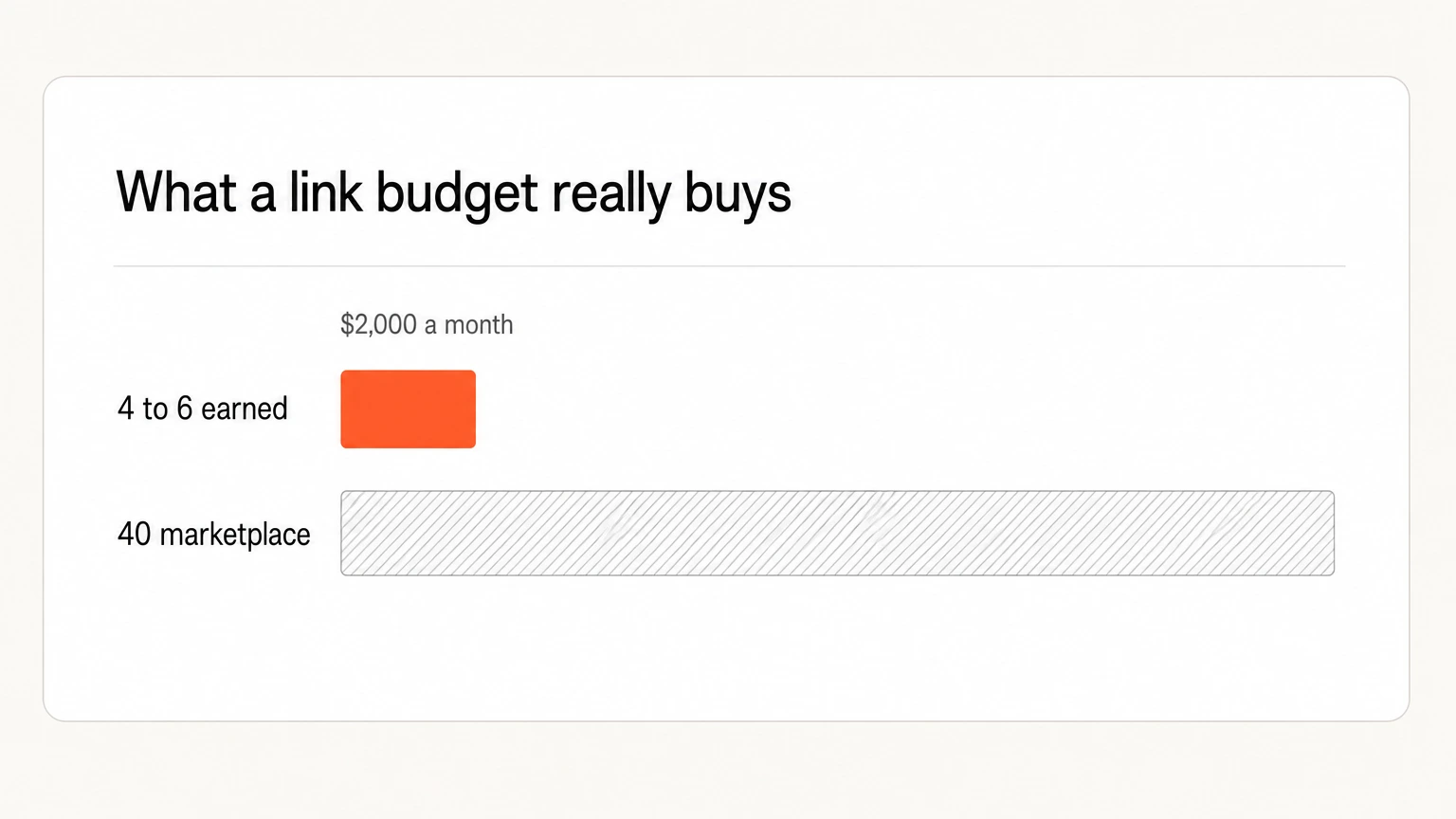
Published benchmarks put SaaS link building retainers at $1,500 to $5,000 a month and individual earned placements at $200 to $500. Our per-placement figures run slightly higher at the top end because roundup inclusion on a genuinely read publication is priced above a guest post, and that is the placement worth paying for. A $2,000 monthly budget buys four to six quality earned placements. Anyone offering forty is selling marketplace positions on sites built for that purpose, which pass little authority and are precisely the sources AI models learn to discount.
SaaS link exchanges, and where the line actually is
Searched constantly, covered honestly almost nowhere, because most providers either sell them or pretend they do not exist.
| Arrangement | What it looks like | Our read |
|---|---|---|
| Integration partner links | You list them on your integrations page, they list you on theirs | Fine, and underused. The link follows a real product relationship, which is exactly what Google says it wants. Most SaaS companies have ten of these available and have claimed none. |
| Co-marketing content | A joint webinar, study or guide, each party linking to it | Fine. The asset exists, both audiences get something, and the links are incidental to the work rather than the point of it. |
| Direct A-to-B swaps | You link to them, they link to you, nothing else changes | Risky at volume, harmless once. Two SaaS companies in adjacent categories citing each other is normal. Forty reciprocal links with the same anchor pattern is a footprint. |
| Three-way and four-way swaps | A links to B, B links to C, C links to A, coordinated in a group | Avoid. The coordination is the problem. These groups get discovered together, and the shared participant list is what makes them detectable. |
| Paid swap networks | A Slack or Discord where members trade placements on request | Avoid. Same footprint problem with worse relevance, and you inherit the reputation of every other member. |
Would this link exist if the other company had never asked for one back? Integration and co-marketing links pass that test easily, which is why they are safe and why we chase them first on every campaign. A swap arranged purely to trade authority fails it, and the volume at which it becomes a problem is lower than most people assume.
How to verify a placement before you pay for it
Domain Rating is the metric everyone quotes and the easiest to manipulate. These are the checks that actually predict whether a link does anything.
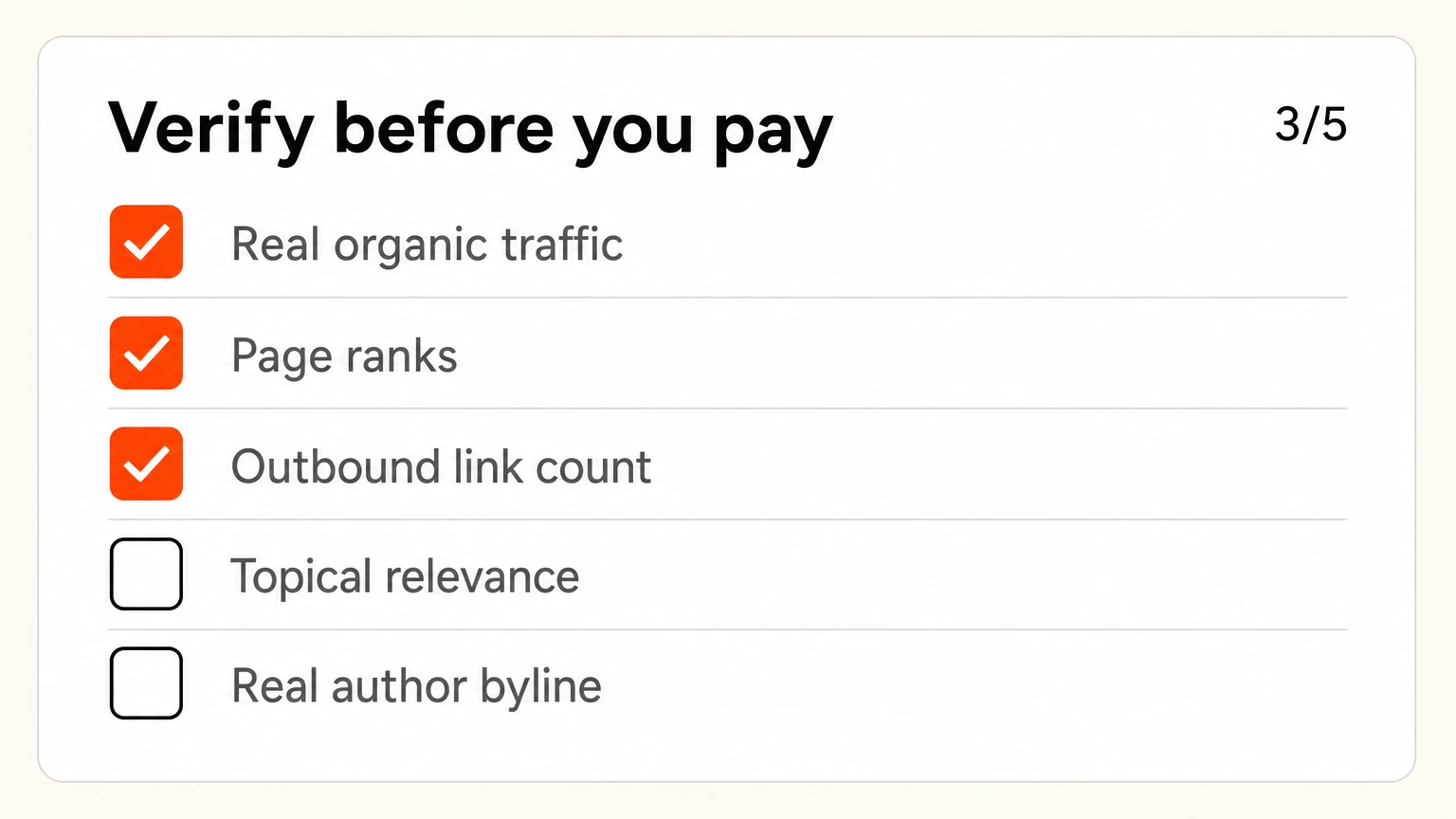
- Real organic traffic, not authority score. A DR 70 site with 200 monthly visitors is a network. Check traffic and check the trend.
- Does the specific page rank for anything? A link on a page with no rankings passes very little. Check the page, not just the domain.
- Count outbound links on the page. Forty links to unrelated sites means the page exists to sell placements.
- Check topical relevance honestly. Would your buyer plausibly read this publication? If not, the link is decoration.
- Look for real author bylines. Named authors with histories signal a real publication rather than a content farm.
- Check traffic trajectory. A site losing traffic steadily is being devalued, and you do not want to be attached to it.
- Ask whether AI engines already cite it. New, and increasingly the most valuable signal of all.
What we refuse, and what we report
The tactics we will not run whatever the brief says, and the detail you get on every placement we do.
We will not do this
- Private blog networks. Sites that exist only to sell links. Detectable, and the damage is yours.
- Bulk guest posting. Volume placements on publications with no real readership.
- Link exchanges at scale. Reciprocal patterns are trivially identifiable.
- Exact-match anchor stuffing. The clearest over-optimization signal there is.
- Comment and forum spam. No value, real reputational cost.
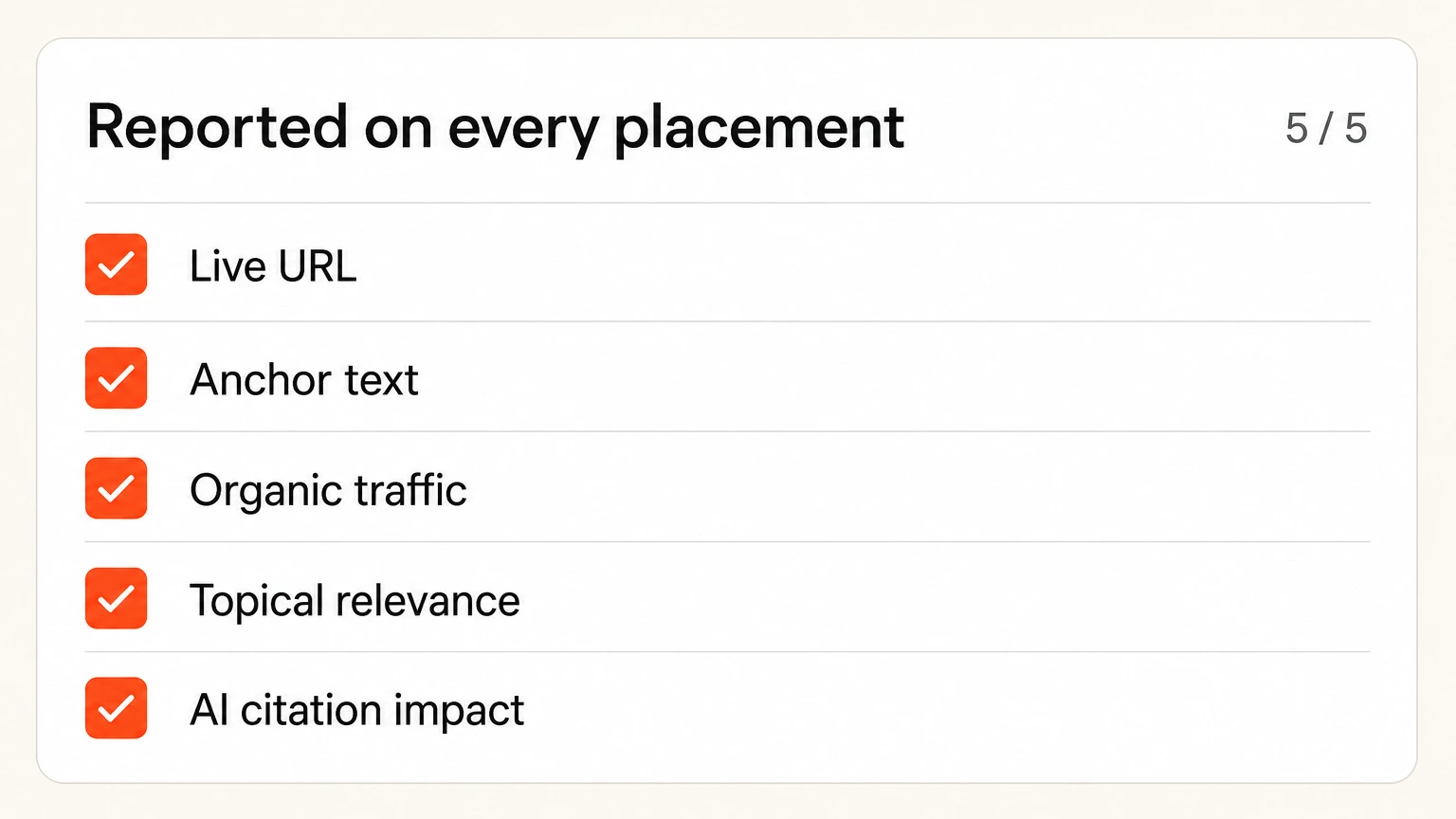
What you get in reporting
- Live URL and anchor text for every link, not a summary count
- Referring domain metrics including real organic traffic, not just DR
- Topical relevance to your category, judged and explained
- Whether the page ranks for anything, because that determines what it passes
- AI citation impact where the placement is a source models retrieve
Which SaaS link building service is best?
How much does link building cost?
What are link building services, in plain terms?
What are SaaS link building services?
How much do SaaS link building services cost?
Do backlinks still matter for SaaS SEO in 2026?
What makes SaaS link building different from general link building?
How do you verify a link is worth buying?
How many backlinks does a SaaS company need?
Do you buy links?
How long before link building shows results?
Links that pay twice
Placements that raise rankings and feed AI citations. Tell us your category and we will show you where the gaps are before you commit to anything.
From $5,000/mo · Every placement reported with live data · Reply within 24h