B2B SaaS SEO
Three to seven stakeholders, a procurement review, and contract values high enough that ninety searches a month can beat nine thousand. B2B SaaS SEO is a different strategy, not a different label.
What is B2B SaaS SEO?
B2B SaaS SEO is search optimization for software sold to businesses, where a buying committee evaluates over weeks or months and the conversion event is a demo or trial. It targets commercial-intent terms tied to contract value rather than search volume.
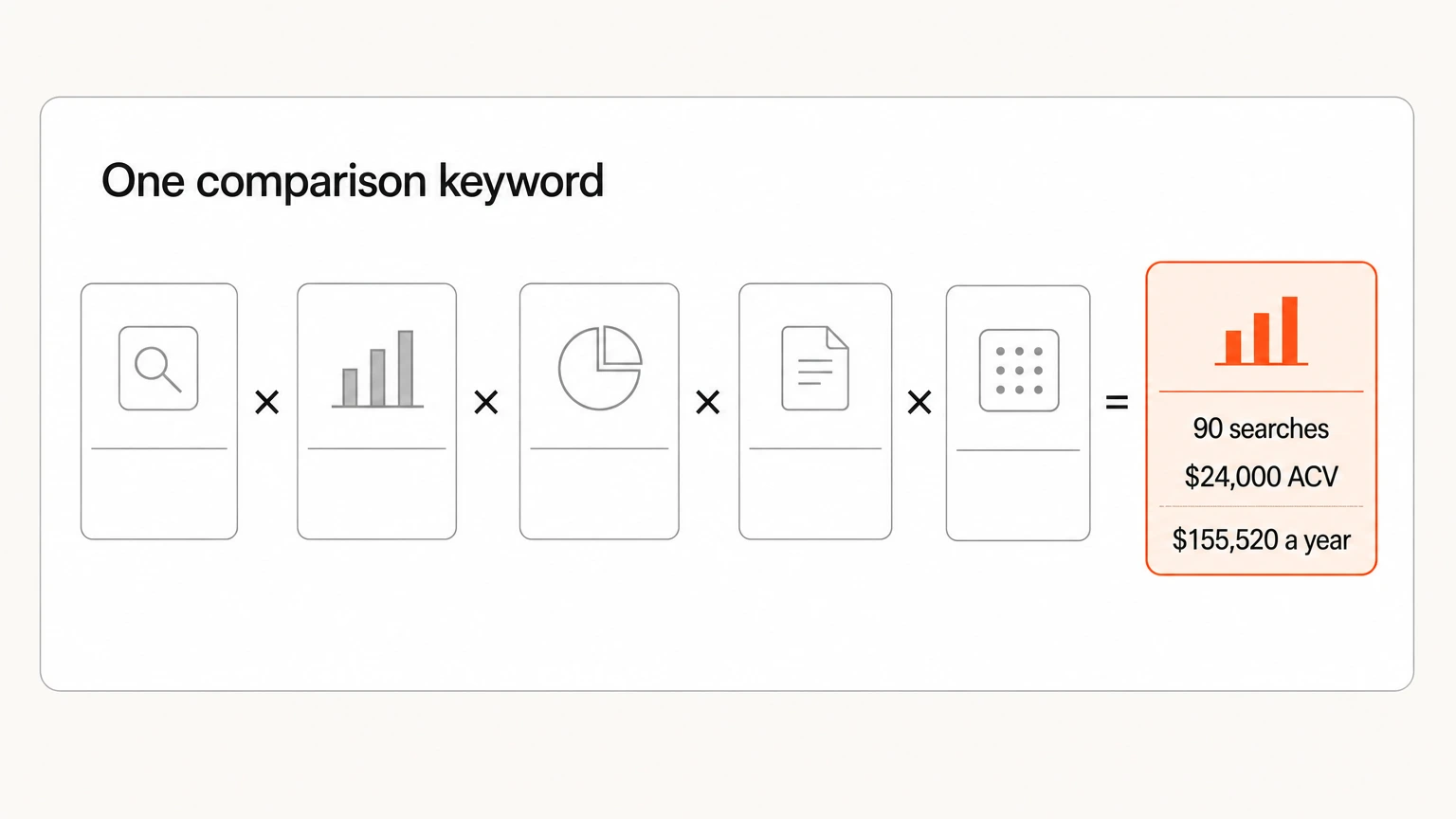
The practical consequence: a keyword with 90 searches a month can be worth more than one with 9,000, because the ninety are decision-makers with budget. Volume-led keyword strategy is the most expensive mistake in B2B SaaS.
B2B versus B2C SaaS SEO
Same channel, materially different strategy.
| Factor | B2C SaaS | B2B SaaS |
|---|---|---|
| Decision-maker | One person, often immediate | Three to seven stakeholders across functions |
| Cycle length | Minutes to days | Weeks to months, with procurement |
| Contract value | $10–$100/month | $500–$10,000+/month |
| Keyword strategy | Volume matters. Scale wins | Intent and ACV matter. 90 Searches can beat 9,000 |
| Content depth | Fast answers, low friction | Depth that survives technical and financial review |
| Conversion event | Signup or purchase | Demo, trial, or a security questionnaire |
| What kills the deal | Friction at signup | An unanswered question from a stakeholder you never met |
The B2B SaaS buying committee: four readers, not one
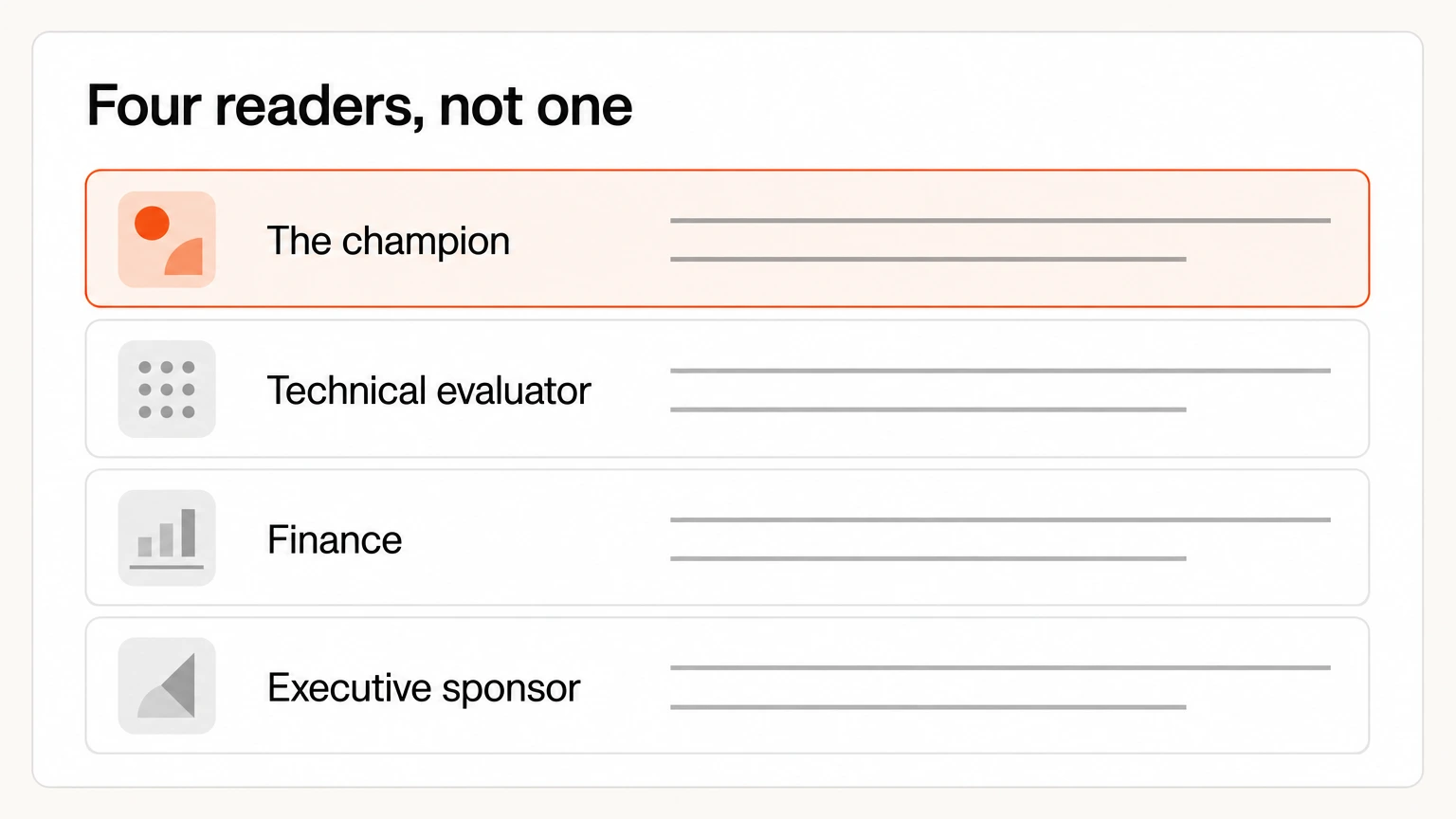
Your champion finds you through search. Then they have to sell you internally, and your content is the ammunition they carry into that meeting.
Almost never with the champion, they already want it. Deals stall when the technical evaluator cannot find your security documentation, or finance cannot find a price. Both are content problems that look like sales problems.
Keyword strategy built on ACV
The single most useful reframe in B2B SaaS SEO is to stop asking how many people search a term and start asking what one customer from it is worth.
Annual value = monthly searches × realistic CTR × conversion rate × close rate × ACV × 12
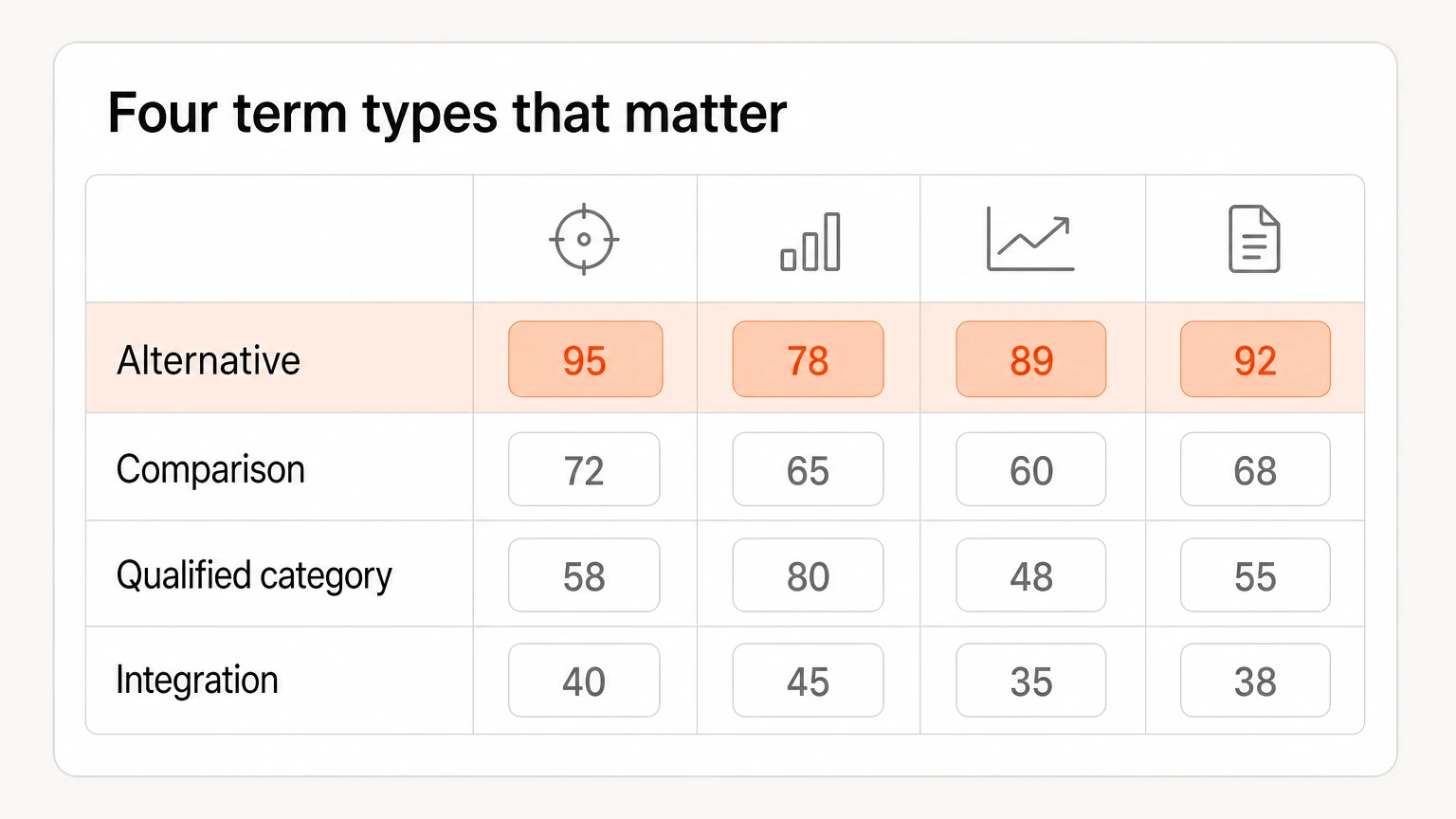
Run that calculation on your top twenty terms and the priority order usually inverts. High-volume category terms drop; unglamorous comparison and integration terms rise to the top.
The four term types that matter
- Alternative terms. Someone actively leaving a competitor. The highest-intent search in B2B software.
- Comparison terms. Active shortlisting, usually with budget already approved.
- Qualified category terms. "For enterprise", "for agencies", "for healthcare", the qualifier is the segment filter that makes the traffic worth having.
- Integration terms. A buyer checking you fit their existing stack. Programmatic, high-converting, and usually uncontested.
Pages that survive committee review
A B2B SaaS page has to work twice: convince the champion, then survive being forwarded to three people who were not searching for anything.
Measuring across a long cycle
The hardest part of B2B SaaS SEO is not producing results. It is proving them inside a reporting window shorter than the sales cycle, which is why so many programs get cut at month five just before the revenue lands.
Report a leading and lagging pair every month
- Month 1–2: indexation coverage and technical fixes shipped. No revenue yet, and pretending otherwise damages credibility.
- Month 2–3: impressions and positions on mapped commercial terms. The first real signal that the strategy is right.
- Month 3–4: demos and trials from organic, split by page template. The first business metric.
- Month 4–6: opportunities created and pipeline influenced. Now the channel is arguable in a board meeting.
- Month 6–12: closed revenue, organic CAC against paid, and cohort retention. The actual verdict.
Judging a B2B SaaS SEO program on closed revenue at month four means judging it on deals that entered the pipeline before the work started. Set the review point at month six minimum, and agree the leading indicators you will accept before then.
Enterprise and mid-market differ too
"B2B SaaS" spans a product at $500 a month and one at $500,000 a year. The search strategy is not the same, and applying mid-market tactics to enterprise wastes most of the budget.
Mid-market, roughly $5K–$50K ACV
- Self-serve trials still convert, so bottom-funnel pages can drive signups directly
- Comparison and alternative terms carry the program
- Volume exists in the category, so classic keyword strategy applies
- Payback is visible within two to four months
Enterprise, $50K+ ACV
- Nobody buys from a webpage. Search creates the shortlist, sales closes it.
- Money terms often have double-digit monthly volume and enormous value
- Security, compliance and procurement content matters more than feature pages
- Analyst and category-defining content drives more pipeline than product terms
- Attribution needs first-touch, because the gap between discovery and close spans quarters
Judging an enterprise SEO program on traffic will always make it look like a failure. Forty visits a month to a page that produced two $80,000 opportunities is an outstanding result that looks terrible in an analytics dashboard.
Your sales team is the research tool
The best B2B keyword research is not in a keyword tool. It is sitting in your call recordings, and almost nobody mines it.
| What to extract | Where you find it | What it becomes |
|---|---|---|
| Competitors named unprompted | Discovery calls, first five minutes | Comparison and alternative pages, prioritized by frequency |
| Recurring objections | Second calls and lost-deal reviews | FAQ sections, migration pages, and dedicated objection pages |
| The words they use for the problem | Anywhere the prospect describes their situation | Page headlines and H1s that match how they search |
| Tools in their existing stack | Technical qualification | Integration pages, prioritized by how often each comes up |
| Who else is in the room | "I'll need to run this past..." | Content for the stakeholder you never speak to |
| Why deals were lost | Closed-lost notes | The most valuable content brief you will ever write |
Sit in on three discovery calls and write down every phrase the prospect uses that differs from your marketing language. That list, without any tool, usually outperforms a month of keyword research.
What is B2B SaaS SEO?
How is B2B SaaS SEO different from B2C SaaS SEO?
Which keywords matter most for B2B SaaS?
How long is the B2B SaaS SEO payback period?
Does B2B SaaS SEO work for high-ACV enterprise products?
What content does a B2B buying committee actually need?
Selling B2B software?
Tell us your ACV, your category and who you lose deals to. We will tell you which terms are actually worth owning.
From $5,000/mo · Built around contract value, not volume