Link building & digital PR for SaaS
The same category roundup that passes link equity is also a source ChatGPT and Perplexity retrieve when a buyer asks which tool to use. One placement, two returns, and most agencies are still pricing it for one.
What is SaaS link building?
SaaS link building earns links and brand mentions from publications, roundups and communities that raise your authority in search, and your citation rate inside AI answers.
That second effect is new and underpriced. The same category roundup that passes link equity is also a source ChatGPT and Perplexity retrieve when someone asks which tool to use. One placement, two returns.
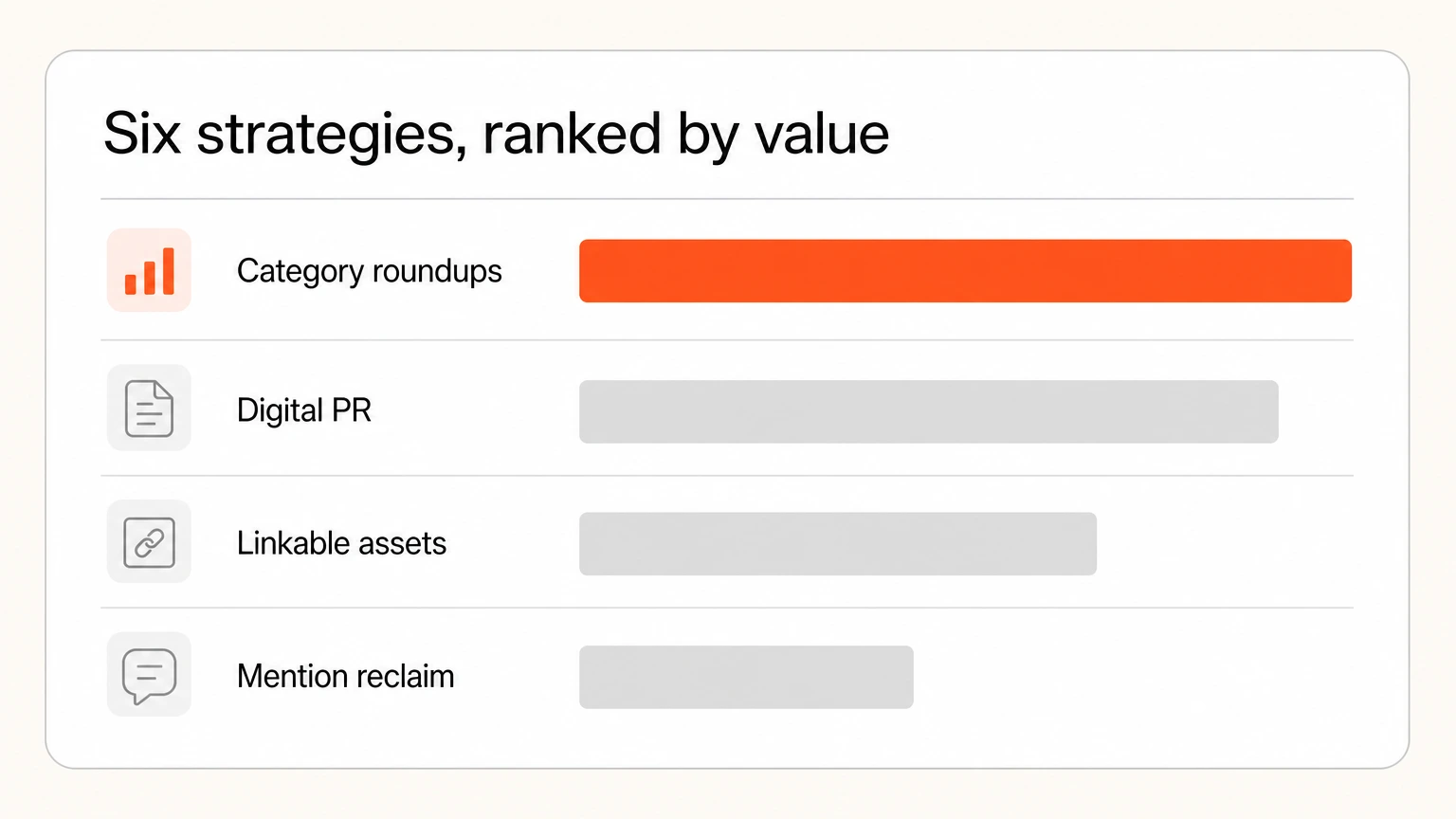
Six strategies that still produce
Ranked by return per hour, based on what we run across client programs and our own products, and on what clients said about that work.
Category roundup placement
Getting listed in "best X software" articles. Passes authority and directly feeds AI citations. The highest-leverage play available.
Digital PR with original data
Survey your users, publish the numbers, pitch journalists. Earns links from publications no outreach email would ever reach.
Product-led linkable assets
Free tools, calculators and templates that solve one slice of the problem. Earns links passively for years.
Unlinked mention reclamation
People already name you without linking. The cheapest links available, and most SaaS companies never look.
Partner and integration links
Every tool you integrate with has a directory. Reciprocal, relevant, and usually sitting there unclaimed.
Founder-led commentary
Your founder has opinions journalists want. Consistent commentary earns placements outreach cannot buy.
Would you want this placement if it carried no link at all? If the answer is no, it is not worth having. Not for rankings, and certainly not for AI citations, where models weight source quality heavily.
PRWiz: the publisher platform we built
Most agencies broker links through someone else's network. We built ours, which means we see the data behind every placement rather than trusting a spreadsheet.
What we refuse, and what we report
The tactics we will not run whatever the brief says, and the detail you get on every placement we do.
What we will not do
- Private blog networks. Sites that exist only to sell links. Detectable, and the damage lands on you.
- Bulk guest posting. Volume placements on sites with no real readership.
- Link exchanges at scale. Reciprocal patterns are trivially identifiable.
- Comment and forum spam. No value, real reputational cost.
- Exact-match anchor stuffing. The clearest manipulation signal there is.
What we report
- Live URL and anchor for every link, not a summary count
- Referring domain metrics including real organic traffic, not just DR
- Topical relevance to your category, judged rather than asserted
- Whether the page ranks for anything, since a link on an invisible page passes little
- AI citation impact where the placement is a source models retrieve
What links actually cost
Published so you can sanity-check any quote you receive. These are earned-outreach costs, not marketplace placement fees. If you want the market-wide numbers rather than ours, we measured them across 251,831 live offers in what link building actually costs.
| Link type | Realistic cost | Note |
|---|---|---|
| Category roundup inclusion | $300–$1,000 | Highest value. Passes authority and feeds AI citations |
| Digital PR placement | $500–$2,000 per campaign | One data campaign can earn ten to fifty links |
| Niche guest post | $200–$600 | Only on publications with genuine readership |
| Unlinked mention reclamation | $50–$150 | Cheapest available. Most SaaS companies never check. |
| Partner directory link | Usually free | Requires only that someone asks |
| Linkable asset (tool/data) | $2,000–$10,000 to build | Then earns passively for years |
A $2,000 monthly link budget buys roughly four to six quality earned links. Anyone offering forty is selling marketplace placements on sites built for that purpose, which carry risk, pass little authority, and are precisely the sources AI models discount. We compared the providers selling both kinds in the best link building services.
How a campaign runs
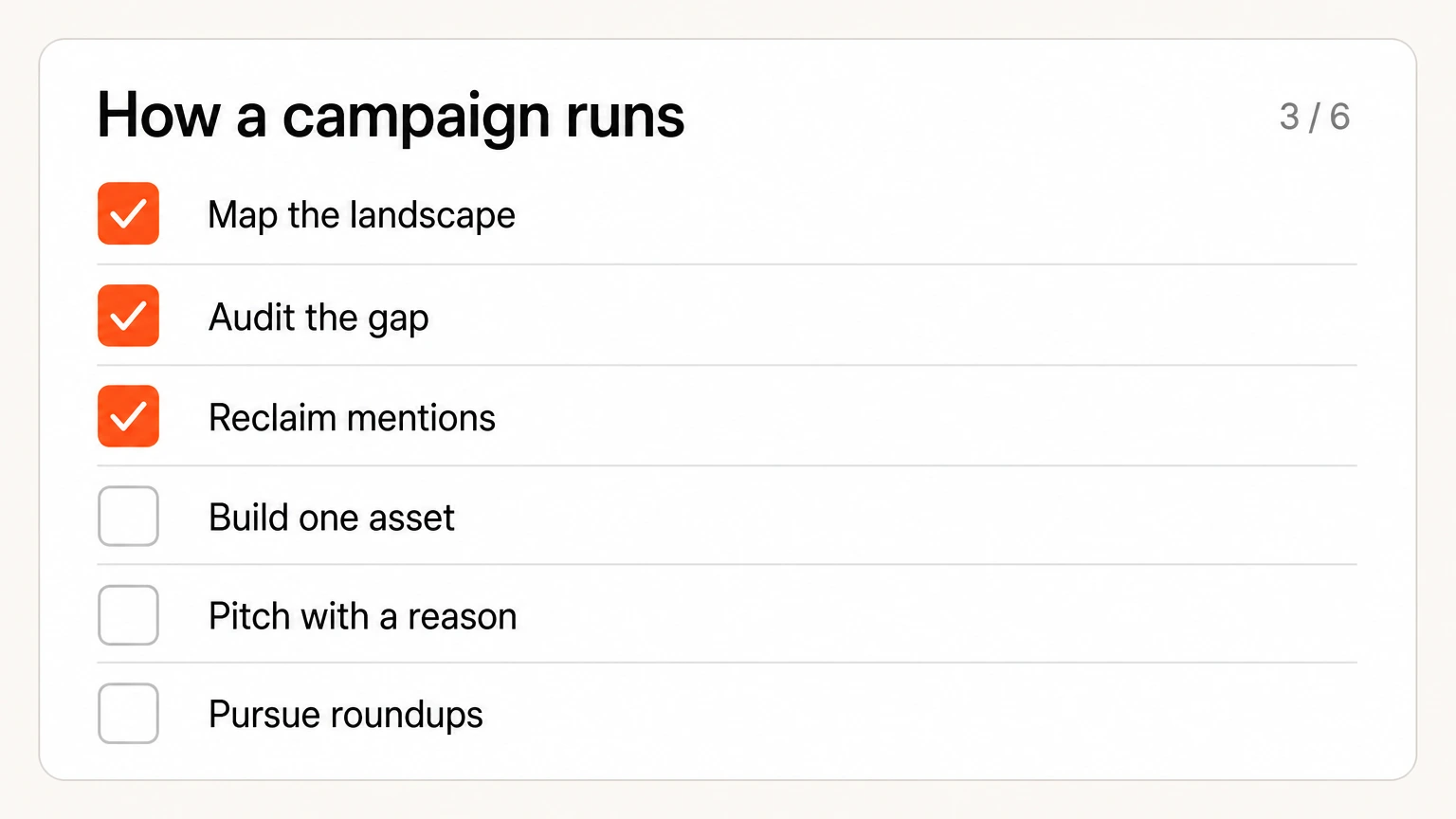
Outreach is unglamorous and mostly consists of being useful to people who do not owe you anything. The process below is what makes it produce consistently rather than occasionally, and the software behind it is listed in the link building tools we use.
- Map the citation landscape. Which roundups, publications and communities already decide your category, both for rankings and for AI answers.
- Audit the competitive gap. Referring domains pointing at pages outranking you on money terms. That list is your target set. If you would rather buy the outreach than run it, we ranked the providers in the best blogger outreach services.
- Reclaim what exists. Unlinked mentions first, because they convert fastest and cost least.
- Build one linkable asset. Original data, a free tool, or a genuinely useful template. Outreach without something worth linking to is cold emailing.
- Pitch with a reason. A specific gap in their specific article, not a template. Response rates differ by an order of magnitude.
- Pursue roundup inclusion deliberately. These are the highest-value placements because they pay twice, in rankings and citations.
- Monitor and reclaim. Links break, get edited, or go nofollow. Unmonitored placements quietly decay.
How to judge a link before you buy it
Domain Rating is the metric everyone quotes and the one easiest to manipulate. These are the checks that actually matter.
High DR, low traffic, dozens of outbound links per page, no editorial standards, and every article reads like it was written to host a link. That combination is a private blog network regardless of what it is called in the pitch.
Anchor text, without the paranoia
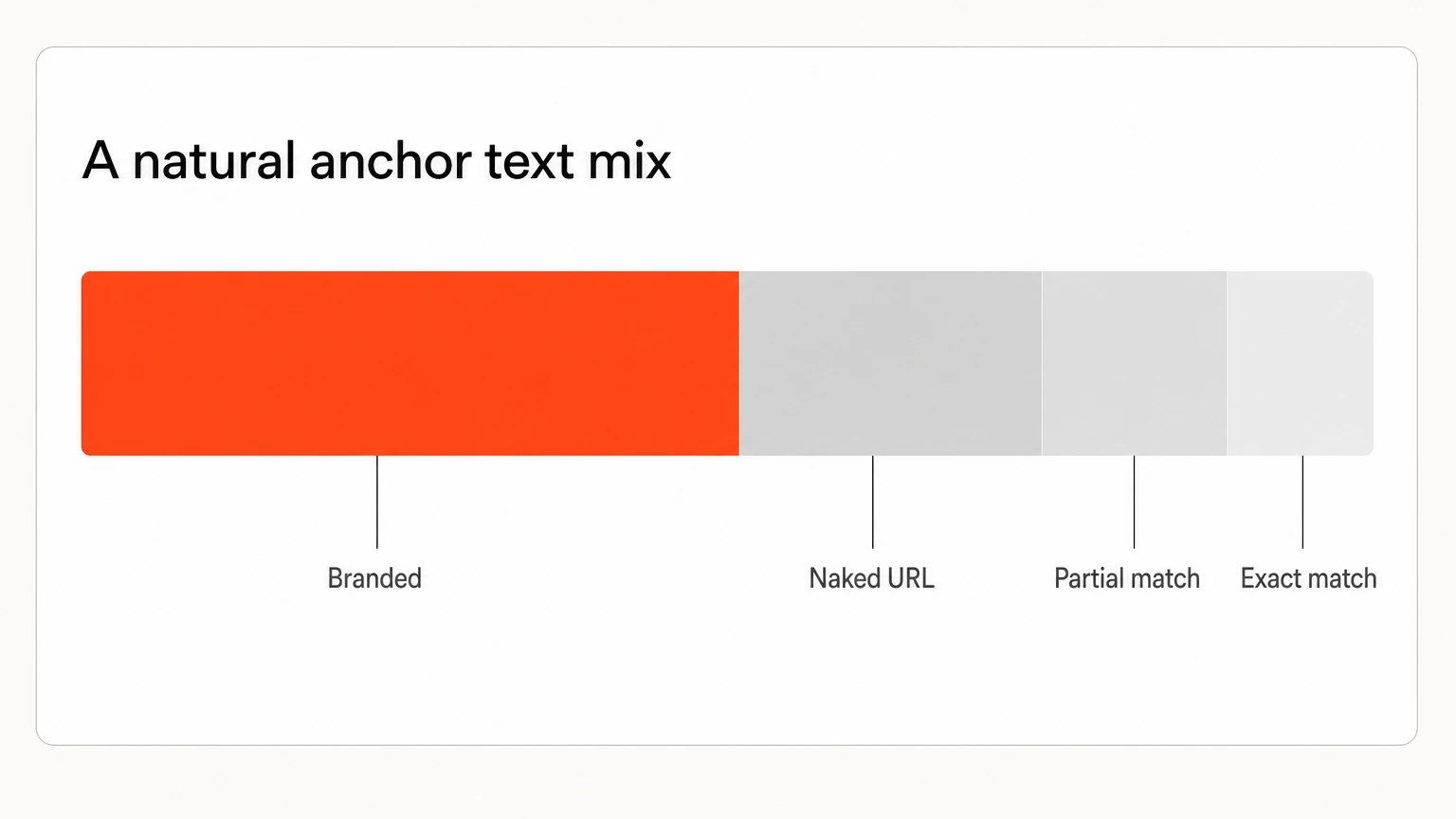
Anchor text still matters and is still routinely overdone. The pattern below reflects what natural link profiles look like, which is the only target worth aiming at.
- Branded anchors should dominate. Roughly half your profile. Real editors link using your company name, because that is how people refer to companies.
- Naked URLs and generic anchors are normal. "Click here", "this tool", the bare URL. Their absence is itself a manipulation signal.
- Partial-match anchors do the work. Phrases containing your term inside a natural sentence.
- Exact-match anchors stay rare. A small share, and never on a page you also bought. This is the clearest over-optimization signal there is.
- Vary by page. Forty links to one page all using the same phrase looks exactly like what it is.
If you cannot control the anchor because a real editor wrote it, that is a good sign about the link. The placements where you dictate anchor text precisely are usually the ones worth least.
What is SaaS link building?
How much does SaaS link building cost?
What are the best link building strategies for SaaS?
Do backlinks still matter for SEO in 2026?
How many backlinks does a SaaS company need?
Is guest posting still effective for SaaS?
Links that pay twice
Placements that raise rankings and feed AI citations. Tell us your category and we will show you where the gaps are.
From $5,000/mo · Every placement reported with live data