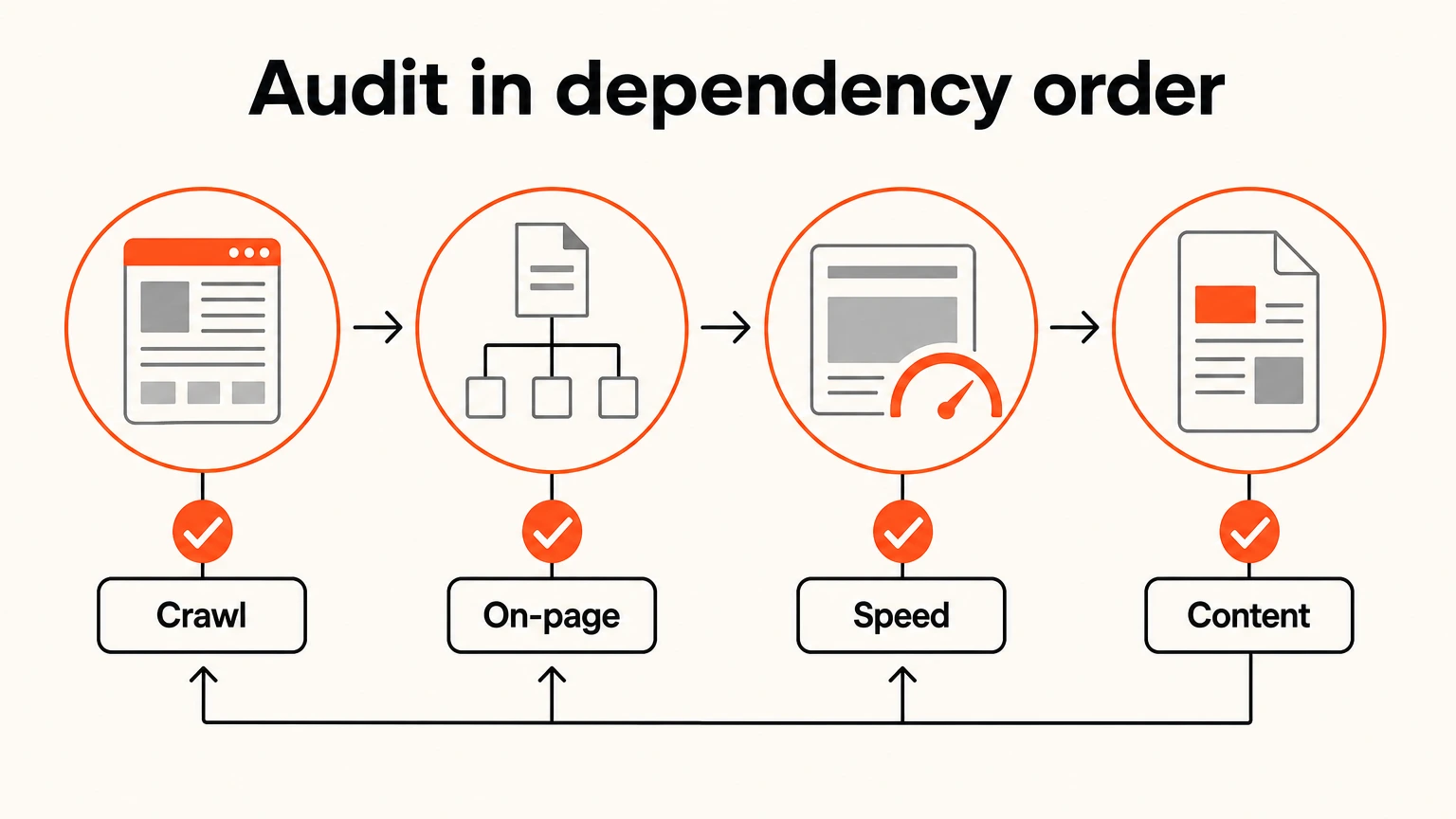
Most SEO audit checklists were written before AI search existed, and it shows. They cover crawling, on-page and speed thoroughly, then stop, which leaves out the layer that increasingly decides whether buyers ever see you at all.
An SEO audit checklist should cover five areas: crawling and indexing, on-page fundamentals, performance and mobile, content and intent, and AI visibility. The first four are standard. The fifth is missing from almost every checklist published before 2025, and it is the one that decides whether AI engines can read and cite you.
Thirty-four checks below, in dependency order, all tickable. Nothing is saved anywhere, so refreshing resets it. Work top down and stop wherever you run out of time; the ordering is deliberate.
Why the order matters
Checklists are usually grouped by category, which is tidy and unhelpful, because it implies the items are independent. They are not.
If your pages are not being rendered, every on-page fix below is wasted effort you will not detect for months. If your commercial pages have no conversion path, ranking them produces traffic and no revenue. Sequence encodes dependency, and working through a category-sorted list in arbitrary order is how audits produce eighty findings and no improvement.
One more thing before you start: an audit is only useful if someone can act on it. Before you begin, know who can approve technical changes and how fixes get into a sprint. Findings that sit in a backlog for a quarter are indistinguishable from findings nobody made.
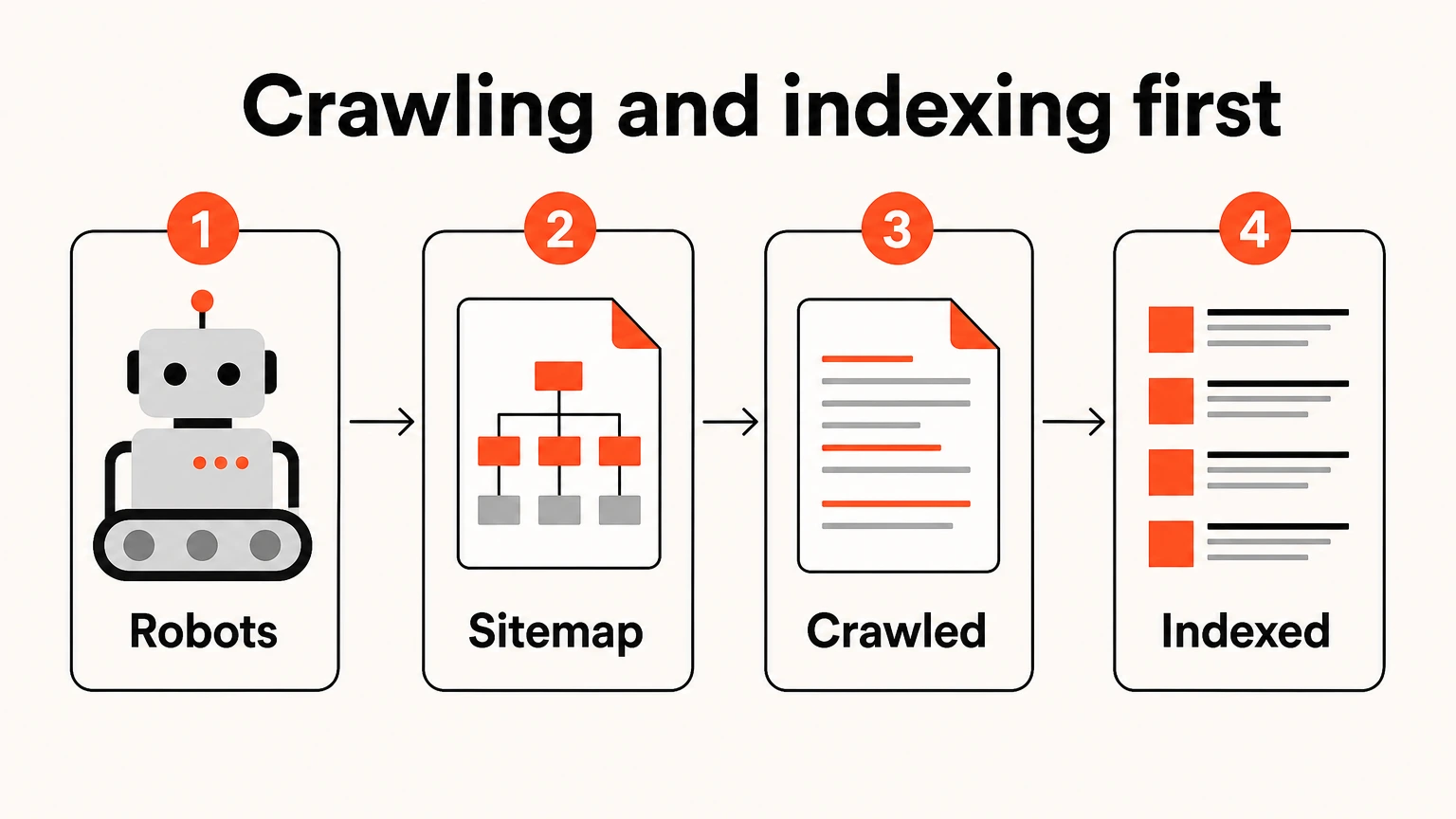
Crawling and indexing
If search engines cannot reach or render a page, nothing below this section matters.
On-page fundamentals
Unglamorous, cheap to fix, and still where a surprising share of easy wins sit.
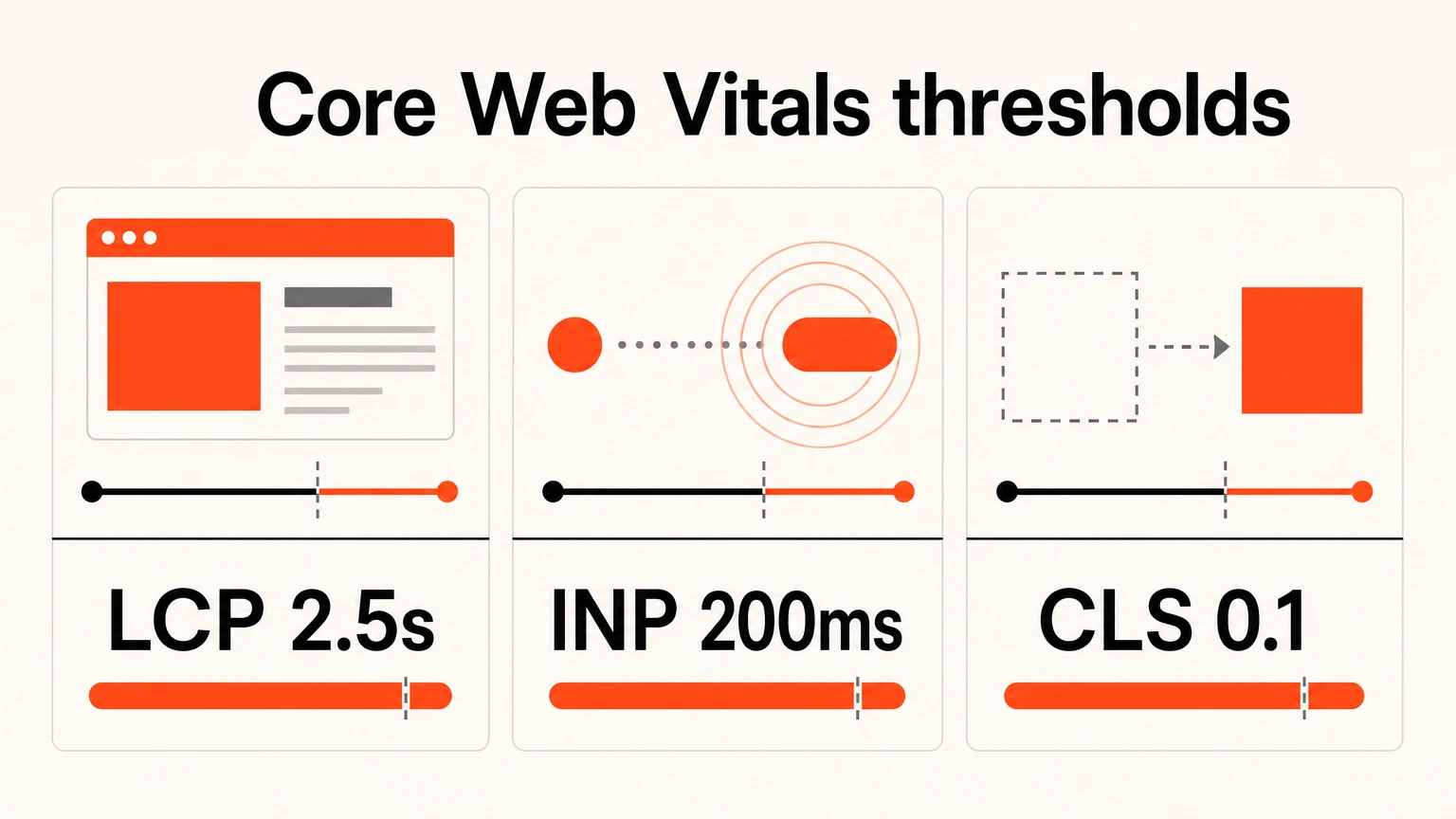
Performance and mobile
Modest ranking impact, substantial conversion impact.
Content and intent
Where audits usually go shallow, because it needs judgment rather than a crawler.
AI visibility
The section missing from every classic audit checklist, and increasingly the one that decides shortlists.
| Section | Checks | What it is looking for |
|---|---|---|
| Crawling and indexing | 7 | Whether engines can reach and keep the pages that matter. |
| On-page fundamentals | 7 | Whether each page states clearly what it is and what it claims. |
| Performance and mobile | 6 | Whether speed or layout is costing conversions as well as rankings. |
| Content and intent | 6 | Whether the page answers the query someone actually typed. |
| AI visibility | 8 | Whether answer engines can extract and cite the page. |
| Total | 34 | Ordered so a finding never depends on a check you have not run yet. |
What audit tools cannot tell you
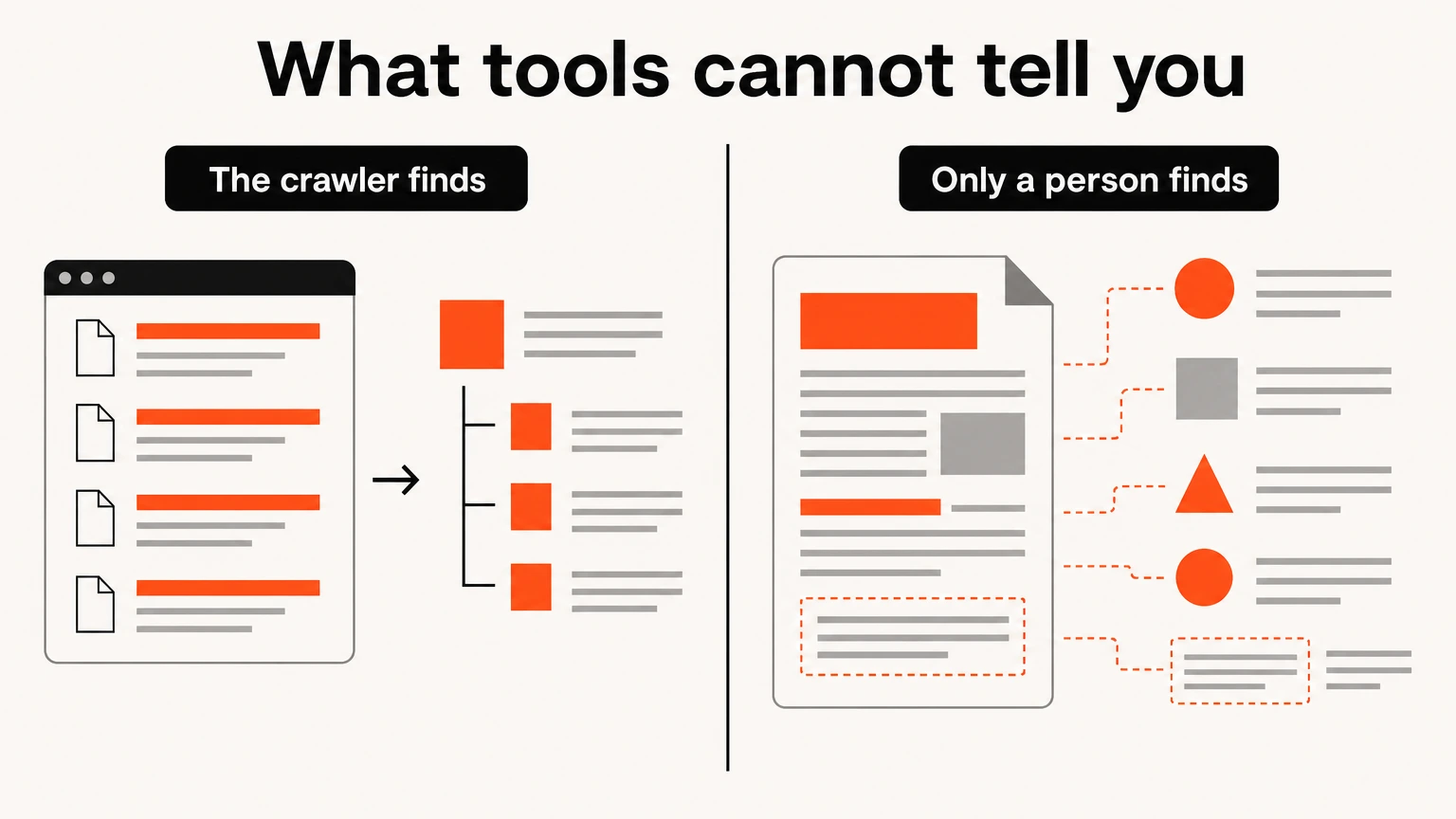
Crawlers are excellent and they have blind spots. These are the checks that need a person, and they are disproportionately the ones that matter.
- Whether content is rendered. Most crawlers fetch raw HTML by default, so a client-rendered page can pass a crawl and still be invisible to AI crawlers.
- Whether a page matches search intent. A tool can tell you a page ranks. It cannot tell you it is answering a different question than the one being asked.
- Whether a fix is worth the engineering cost. Severity scores are generic. Whether two sprints of developer time is justified depends on your roadmap.
- Whether AI engines describe you accurately. No crawler checks this. You have to ask the engines directly.
- Which of eighty findings actually matter. This is the judgment you are paying for when you hire someone, and the thing a scored report cannot supply.
A related caution: asking an AI assistant to audit a URL produces a plausible-looking list that misses most critical errors, because it cannot crawl properly, compare rendered against raw HTML, or read your Search Console data. Use a crawler for the audit and a model to help interpret the output. That split works well; the reverse does not.
This checklist is the first two weeks of every engagement
We run all thirty-four checks, plus log file analysis and a full AI citation baseline across seven engines, then deliver a fix list ranked by revenue impact rather than by severity score. The ranking is the deliverable. Anyone can produce eighty findings.
- Prioritized by revenue impact, with effort estimates your engineers can plan against
- Implementation specs, not just findings. Written so a developer can act without interpreting
- AI visibility included, which almost no audit currently covers
- Credited against your first month if you go on to a retainer
What to do with the findings
The audit is the easy part. Converting it into shipped changes is where most of them die.
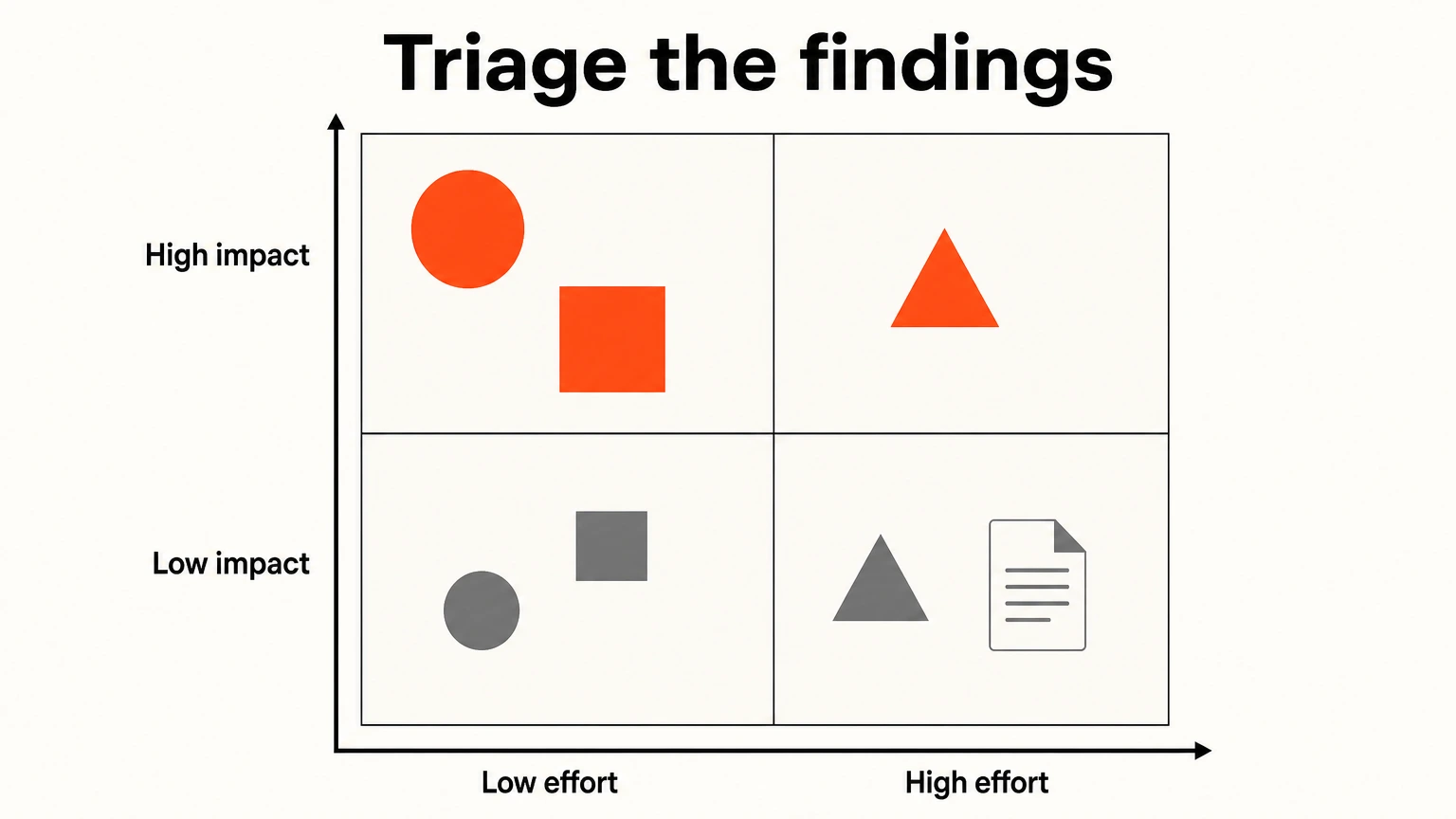
- Sort by revenue impact, not severity. A critical-severity issue on a page nobody visits matters less than a moderate issue on your pricing page.
- Estimate effort alongside impact. The cheap high-value fixes should be identifiable at a glance, because those are what actually get done.
- Separate what you can ship from what needs engineering. Two different queues with two different owners.
- Fix the indexation blockers first, regardless of where they sit on the impact list. Everything downstream depends on them.
- Re-run the audit after the deploy. Rendering and canonical regressions ship silently with any front-end change.
- Set a recurring date. Quarterly for most sites, monthly if you ship weekly.
If you want the software-specific version with fourteen more checks around JavaScript rendering, programmatic pages and documentation cannibalization, the 47-point SaaS SEO checklist covers it. For the AI visibility section in depth, see LLM SEO.
Frequently asked questions
What should an SEO audit checklist include?
How often should you run an SEO audit?
How long does an SEO audit take?
Can I do an SEO audit myself?
What is the difference between a technical SEO audit and a full SEO audit?
Can ChatGPT run an SEO audit for me?
What are the most common SEO audit findings?

Mohammad Qaiser
Working in SEO since 2010, founder of Authority Magnet since 2018, and campaign lead on every case study the agency publishes. Also built PRWiz, where this work gets tested on our own software before it reaches a client.
Work with us